Emergency Drinking Water Planning for Idaho Households
An outage, wildfire, winter storm, or water advisory can make a dependable tap unavailable with little warning. A household plan helps you decide how much water to keep, how to store it, and what to do when a notice changes what is safe to drink. The key is to prepare for your household’s needs and follow the instructions from your water supplier or local health officials.
Start With Your Household’s Water Risks
Emergency water planning starts with two questions: what could interrupt your supply, and how would that affect your home? In Idaho, the answer depends on whether you use a public water system or a private well, where you live, and which services depend on electricity.
Public water customers may lose service during a main break, a power-related disruption, or other system emergency. A utility may also issue a notice that restricts how tap water can be used even when water still flows. Find your supplier before an emergency; the name on a bill, a rental agreement, or a community notice can help. If you are unsure, Finding Your Local Idaho Tap Water Source and Annual Quality Report can help you identify the system that serves your address.
Private wells bring a different concern. Many household well pumps need electricity, so an outage can stop water delivery even if the well itself is not damaged. A well can also be affected by flooding, nearby contamination, or a mechanical problem. Unlike a regulated public system, a household well does not come with routine public monitoring of the tap. For general household safety and maintenance responsibilities, see Who Is Responsible for Idaho Private Well Water Safety?.
Think through the disruptions that are plausible for your location and home, rather than planning around only one scenario. Consider whether you have:
- A private well with an electric pump
- A basement or low-lying area that could take on floodwater
- A long drive to a store or an emergency distribution point
- Household members who cannot safely carry water
- A water-dependent medical device or care routine
- Livestock or pets that need their own drinking supply
- Limited storage space, such as in an apartment or shared home
Your household may need more than drinking water. Cooking, preparing infant formula, brushing teeth, and taking medicines can all require water. Hygiene and cleaning add demand during a long outage, although they may be managed with a separate supply or non-water alternatives. Keep drinking and food-preparation water protected from water reserved for cleaning.
A water plan also depends on reliable information. Identify your water supplier’s official website and the appropriate local health department or emergency management channel. Save the information where household members can find it, including offline in case mobile service or power is interrupted. For an overview of how Idaho public drinking water is regulated, see How Idaho DEQ Regulates and Monitors Community Water Systems.
Work Out How Much Water to Store
A widely used starting point for emergency planning is at least one gallon per person per day for several days, with a longer supply—ideally enough for up to two weeks—providing a stronger buffer when space and resources allow. Treat that as a planning baseline, not a guarantee that every household will need exactly that amount. Heat, activity, illness, pets, cooking habits, and the length of an interruption can change demand.
| Household or use | How to plan |
|---|---|
| Drinking water | Set aside a reliable daily supply for each person, including children. |
| Food and medicine | Allow for water used in cooking, preparing food, and taking medicines. |
| Pets | Estimate a separate amount based on each animal’s size, needs, and routine. |
| Private well | Store water for the time the pump could be without power or service. |
| Longer disruption | Increase the reserve if storage space allows and replenishment may be difficult. |
| Hygiene and cleaning | Plan separately, using a safe source or non-water alternatives where appropriate. |
To estimate a household reserve, multiply the number of people by the number of days you want to cover, then add water for pets and other specific needs. For example, a household of four planning for seven days would start with 28 gallons for the people in the home, before adding water for pets or special uses. A gallon is heavy, so store the supply in manageable containers and spread it across more than one location if that is practical.
Do not count on being able to collect water after an emergency begins. A store may be closed, nearby supplies may sell out, roads may be difficult to travel, or a local notice may affect which sources are usable. A reserve at home buys time while you wait for updated instructions or access to safe water.
If your storage capacity is limited, prioritize drinking and food preparation. Store water in a way that is easy to reach without lifting containers beyond what household members can manage. A smaller reserve that is safely stored and accessible is more useful than a larger supply that cannot be moved or protected.
People with medical, caregiving, or infant-feeding needs should plan those uses specifically. Ask a medical professional about water requirements for a treatment routine or medical equipment. For questions about health effects from a water concern, contact a local health department or medical professional rather than relying on a household filter or a general estimate.
Store Water So It Stays Usable
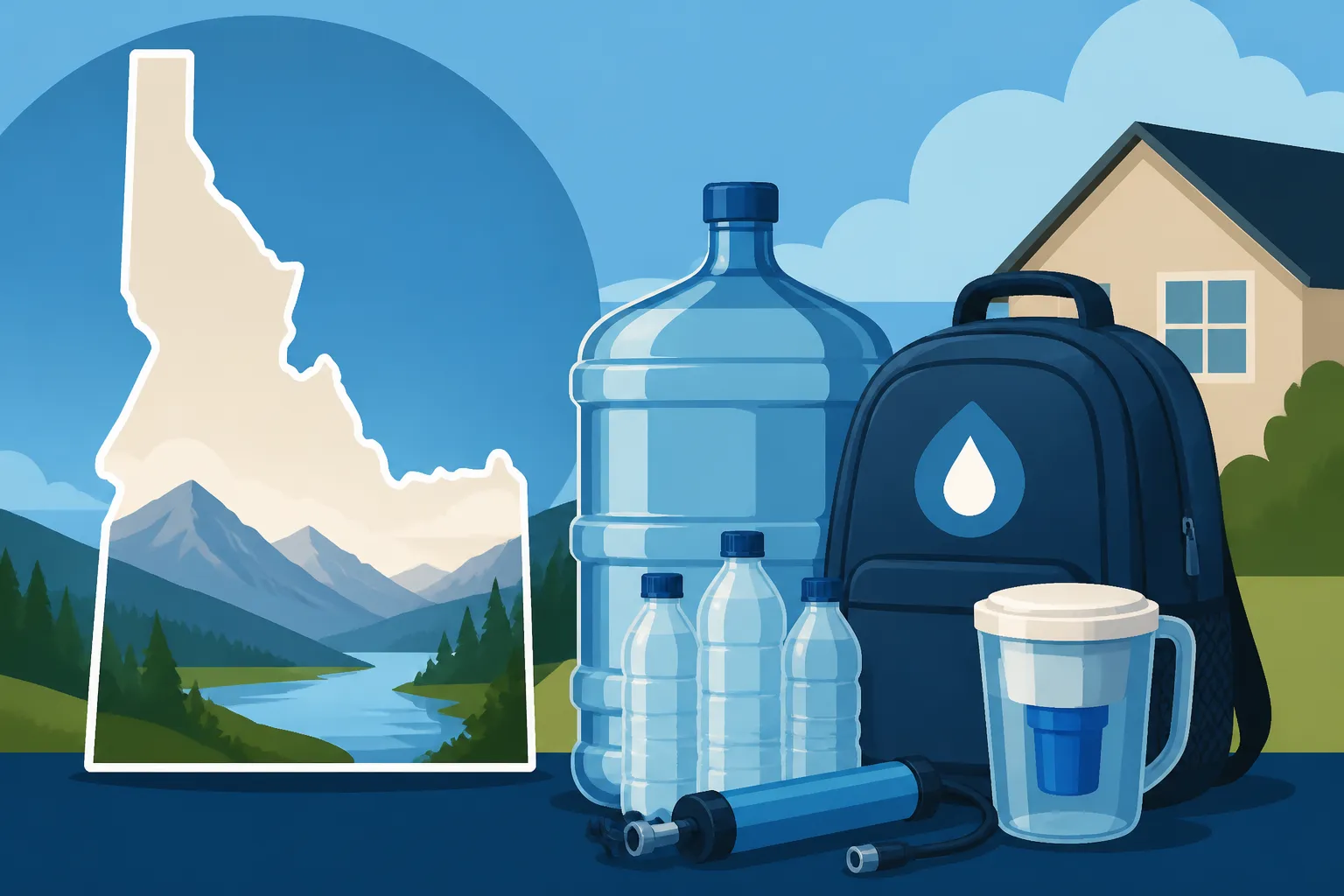
A water reserve is only helpful if it remains protected. Commercially bottled water can be a convenient option; keep it sealed, intact, and stored according to the manufacturer’s instructions. Check the packaging periodically for leaks or damage, and replace it if its condition is uncertain.
If you fill containers yourself, use containers intended for drinking water or food storage. Do not reuse containers that held fuel, pesticides, cleaners, or other chemicals. A container that looks clean may still have residues that are unsafe for drinking water.
A practical filling routine is:
- Wash your hands and clean the container and its lid.
- Follow the container manufacturer’s instructions for cleaning and sanitizing it.
- Fill it with water from a source that is safe to drink at the time you fill it.
- Close it securely, label it with the date, and note that it is drinking water.
- Store it in a cool, dark place away from chemicals, fuel, and direct sunlight.
- Inspect it periodically and rotate or replace it according to the container and water source guidance.
Do not fill a reserve from a tap when a notice says not to use the water, or when the water’s safety is in question. A boil-water notice, for example, may allow water for certain uses only after treatment, while a do-not-drink notice can indicate a different type of concern. Check the notice before collecting water, and do not assume that water is safe just because it looks clear.
Choose storage locations that are protected from freezing, excessive heat, and flooding where possible. Avoid putting containers directly on a floor that could be exposed to floodwater or chemical spills. Keep the reserve away from household products and make sure containers are stable and not likely to fall or split.
Labeling matters when several household members are sharing the job. Mark which containers are drinking water and which are for other uses. Keep lids closed and avoid dipping cups or hands into a stored supply; pouring from a spigot or clean, dedicated container helps reduce the chance of contamination.
Include water in your regular emergency-supply check. Look for cracked containers, damaged seals, or changes in storage conditions. If you cannot tell whether stored water was kept safely, do not rely on it for drinking or food preparation. Replace it with a known-safe supply.
Respond to Water Advisories and Outages
When water service changes, the first step is to find out exactly what the official notice says. Use the water supplier’s current information and local public health or emergency management updates. An alert may apply to a specific area, a particular use, or a limited period. Do not assume that a neighbor’s information covers your address.
In Idaho, a supplier may issue a boil-water advisory or another type of notice when conditions require customers to take precautions. For context on what these notices mean, see Idaho Boil Water Advisories: Emergency Protocols and Tap Safety. Follow the instructions in the current notice, including which uses are affected and what actions are required. If the notice is unclear, check the supplier’s official update or contact the appropriate agency using contact details listed on its official website.
A boil-water advisory and a do-not-drink notice are not interchangeable. Boiling can address some microbial risks when officials direct customers to boil, but it does not remove many chemical contaminants or dissolved metals. If a notice says not to drink the water, do not try to make it safe by boiling unless the official instructions specifically say otherwise. See Do Not Drink vs Boil Water Advisories: Identifying Acute Tap Risks for more on the distinction.
During a boil-water advisory:
- Use the water only in ways allowed by the notice.
- Follow the official directions for water that must be boiled or replaced with bottled water.
- Check whether the notice addresses drinking, cooking, brushing teeth, ice, or other uses.
- Do not assume that a filter pitcher or refrigerator dispenser makes affected water safe.
- Wait for the official all-clear before returning to normal use.
The details can vary with the reason for an advisory. Follow the actual notice rather than a generic checklist. For practical questions about ice and brushing teeth during an Idaho notice, see What Water Is Safe for Brushing Teeth and Ice During an Idaho Notice?.
During a do-not-drink notice, use a known-safe alternative for drinking and any other use the notice identifies. Do not use boiling as a substitute for the instructions. A notice may also specify whether the water can be used for bathing, laundry, or other purposes, so read the full notice rather than interpreting its title alone.
A loss of water pressure or an interruption in service can also prompt an advisory. If water returns, do not assume that service restoration means every restriction has ended. Check for the official all-clear and follow any instructions for flushing plumbing or discarding ice. For current notice information, Finding Active Water Advisories and All-Clear Notices in Idaho offers related guidance.
If you are a renter, guest, or resident who does not receive the water bill, make a plan to receive alerts directly. Ask the property manager or host which supplier serves the building and where official updates are posted. Renters may also find How Idaho Utilities Reach Renters Who Do Not Receive Water Bills useful. Do not rely on a message chain as the only source for a safety instruction.
Identify Backup Sources Without Taking Unnecessary Risks
The safest backup is a supply whose source and condition are known. Sealed bottled water and properly stored household water are usually easier to evaluate than water collected from an outdoor source during an emergency.
If your planned reserve runs low, check official emergency updates for distribution sites or other sources identified by local authorities. Use current official information to confirm that a location is operating and that the water is intended for drinking. Avoid making a long trip based on an old post or an unverified message.
Do not assume that water from a stream, irrigation canal, pond, lake, snowbank, or flood is safe to drink. It may contain germs, chemicals, sediment, or other contaminants. Clear water is not proof of safety, and a household filter may not remove every kind of contaminant. Boiling, disinfection, and filtration each have limits, and the correct approach depends on what may be in the water. When a concern involves possible chemical contamination, seek official guidance rather than choosing a treatment based on appearance or taste.
Rainwater and melted snow are not automatically safe drinking sources either. Roofs, collection containers, and surrounding surfaces can introduce contamination, and water may need treatment suited to the specific risks. If you have not planned and assessed that source in advance, use a known-safe supply for drinking and food preparation.
A private well owner should prepare for a power interruption separately from a public water customer. A portable generator may help operate some equipment, but safe electrical installation, ventilation, and fuel handling are essential. Follow the generator manufacturer’s instructions and seek qualified help for electrical connections. Never operate a fuel-burning generator indoors, in a garage, or near openings where exhaust could enter the home.
Even if a well pump is running, do not use well water if flooding or another event may have affected the well until you have reliable safety guidance. Water from a private well may need testing after certain events or changes. For recommended testing considerations, see Sudden Water Changes in Your Idaho Well: When to Test the Water. If a test finds a concern, use the recommendations from a certified laboratory, local health department, or qualified water professional.
Treatment devices are not a substitute for checking the problem and matching a device to it. A filter or treatment system is designed to reduce particular substances or contaminants, not everything that could affect water. A device’s certification should match the contaminant shown by a reliable water test or identified in an official notice. During an advisory, follow the notice rather than assuming a household treatment system overrides it. For more on that limitation, see Why Pitchers and Carbon Filters Fail to Remove Microbes During Alerts.
Plan for People, Pets, and Daily Routines
A useful emergency plan fits the people who will use it. Make sure each household member knows where the stored water is, how to open or dispense it, and where to check for official updates. If one adult is away, another person should be able to locate supplies and understand the current instructions.
Account for people who may have particular needs, including infants, older adults, people with disabilities, and anyone whose care routine depends on water. Do not estimate medical or infant-feeding needs from a general household rule. Ask a health professional for guidance on a specific care plan, and follow product directions and official water notices.
Pets need a separate plan. Include the animals in your daily estimate and keep their water supply protected from cleaning products and other sources of contamination. If you care for livestock, make a separate arrangement that reflects the animals and the duration of a possible interruption.
Think through tasks that can be adjusted to reduce demand:
- Use shelf-stable foods that need little or no water to prepare.
- Keep disposable plates or other low-water cleanup options available if appropriate.
- Use hand sanitizer when hands are not visibly dirty and it is suitable for the situation.
- Set aside water for essential food preparation rather than using drinking water for routine cleaning.
- Keep a written list of which household tasks require safe drinking water.
These measures can stretch a reserve, but they do not replace safe water for drinking, food preparation, or other uses named in an official notice. Do not conserve water by reusing water that may have been contaminated, or by ignoring a notice about how tap water may be used.
For renters and people in shared housing, clarify who is responsible for storing supplies and communicating alerts. A building’s shared plumbing or a common well can affect multiple units. Ask the property manager or provider how residents will be informed, but also keep access to official supplier updates. If you travel or stay in a vacation rental, How Idaho Renters and Vacation Guests Can Receive Direct Water Alerts explains why direct alerts matter.
Keep the Plan Ready and Review It
A plan is more dependable when it is easy to maintain. Put the key information in one place: your water supplier, official alert channels, household water estimate, storage locations, and any special needs. Keep a printed copy in case devices lose power or internet access.
Set a recurring reminder to check the supply and review the plan. Replace damaged or questionable containers, rotate stored water as directed by the source and container guidance, and adjust quantities when the household changes. A new pet, a move, or a change in care needs can make an old estimate unsuitable.
Before a forecast storm or planned trip, check the household supply and official notices. If a water emergency is already underway, focus first on instructions that apply to your location and use. Do not wait for a social media post to confirm an advisory, and do not assume that an old notice still applies after conditions change.
A simple household checklist can make the plan actionable:
- Identify whether the home uses a public system or private well.
- Save official supplier and local alert information.
- Store a practical reserve of known-safe water.
- Include water for pets and specific household needs.
- Keep water containers clean, labeled, sealed, and protected.
- Know the difference between a boil notice and a do-not-drink notice.
- Identify a safe way to obtain more water if the disruption lasts.
- Wait for official instructions before returning to normal tap use.
Preparation does not require elaborate equipment. A known-safe reserve, clear instructions, and a reliable way to receive updates can prevent rushed decisions when service is disrupted. Revisit the plan periodically so the supply and household instructions still match the people, plumbing, and water source at home.
Frequently Asked Questions
How much emergency drinking water should an Idaho household store?
A common planning baseline is at least one gallon per person per day for several days, with a longer supply—ideally up to two weeks—providing more time if storage allows. Add water for pets and specific household needs.
Can I boil tap water during every water advisory?
No. Boiling may be directed for certain microbial concerns, but it does not remove many chemical contaminants or dissolved metals. Follow the specific notice. If it says not to drink the water, do not assume boiling makes it safe.
Is a home water filter enough during a boil-water advisory?
Not necessarily. Filters are designed for specific reduction claims, and many do not remove microbes. Follow the advisory’s instructions and do not treat a household filter as an automatic substitute.
What should a private well owner do during a power outage?
Use stored water if the well pump stops, and follow safe generator instructions if using backup power. If flooding or another event may have affected the well, seek reliable guidance and testing recommendations before relying on the water.
Disclaimer
This article is for general informational purposes only and does not constitute professional advice. Laws, prices and regulations vary by location and change over time. Consult a qualified professional for guidance on your specific situation. Idaho Water Guide is not a government agency or water utility and is not affiliated with any public water system.